
Many of us grow up believing that milk, cheese and other animal products are part of everyday life. Yet when we look closely at how these foods reach our plates, we discover a reality that is very different from the cheerful images in the ads. Behind the scenes, for animals, the journey means suffering and pain that is unnatural and inhumane.
Some people worry that a plant-based diet would not give all the necessary nutrients. In reality, a well-balanced plant-based diet is followed all over the world, including by top athletes. Scientific studies have proven the many benefits of a plant-based diet: it supports the immune system, reduces inflammation in the body, helps maintain a healthy weight and healthy gut, and reduces the risk of cardiovascular diseases, strokes and diabetes.
Dr. Jane Goodall stopped eating meat in the 1960s when she became aware of the suffering the animal based food industry causes to sentient beings. Until the age of 91 she worked tirelessly for the wellbeing of animals, people and the environment inspiring whole generations around the world to do the same.
Today, an increasing number of people are choosing plant-based diets for health reasons and out of compassion for animals. The meat and dairy industries are based on the exploitation of animals who are kept in captivity and deprived of their natural lives. Many of these animals are equally or more intelligent than our companions, dogs. Yet, they are treated as products. The dairy cows are mechanically impregnated time and time again just to take the milk that belongs to their calves. After the birth, the calves are taken away from their mothers, and their milk will end up on the supermarket shelves for humans. Meat chicken of fast growing varieties are crammed in tiny spaces causing them health problems and pain. The egg laying hens have short lives during which they are kept in cages with wire mesh floors. For not being useful, the new born male chicks are brutally killed, some 330 million of them each year in the EU alone. Pigs are exposed to a lot of suffering from gestation grates to painful castration and tail docking before slaughtering. When the animals are fully grown for meat or are no longer productive, they are killed. Millions of living animals are also exported in trucks outside the EU for slaughter. When they are no longer productive, their lives usually end much earlier than they should.
The animal industry is also a major source of greenhouse gases and methane that cause climate change. Forests are cut down to grow grain and soy to feed the billions of animals. This releases large amounts of CO₂ and destroys biodiversity. Water is wasted to transform vegetable protein into animal protein. Surface water and underground aquifers are shrinking and becoming polluted from chemicals used in agriculture and animal waste. The digestive systems of animals, especially cows, produce large quantities of methane which is a much more potent greenhouse gas than CO₂. And finally, vast amounts of fossil fuels are used in agriculture and transport.
With the knowledge we have, we can all rethink our choices to have a huge impact on our own health, animal health and planetary health. Using basic plant-based protein ingredients (lentils, beans, soy groats, etc.) can also save a lot of your money!
If you hesitate where to start, here are a few tips to make the shift to a plant-based diet easy, step by step:
-
Swap one category at a time. For example, start with plant-based milks (lots of choice), and soy or oat yoghurt, then move to spreads, such as hummus and plant-based cheeses.
-
Veganise favourites. Make your regular meals plant-based:lentil or soy groats, Bolognese or lasagna, chickpea or tofu, seitan or tempeh curry, vegan vol-au-vent, so they taste familiar.
-
Make it convenient by having a few ready-made vegan items for busy days (veg burgers, frozen veggies, hummus)
-
Always keep basic ingredients in stock. Always have staples like pasta, quinoa, couscous, tomato sauce, legumes, lentils, chickpeas, beans, nuts, seeds, etc.
-
Aim to increase plant-based meals over time; every vegan meal matters and consistency beats perfection.
-
For a balanced diet, make sure to use different sources of vegan protein in your daily meals.
-
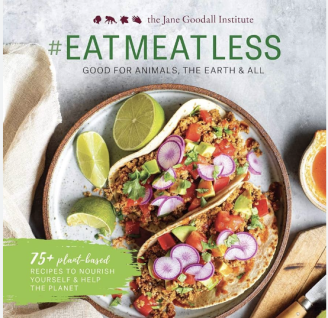
Get great inspiration for vegan recipes on the internet or from our book “Eat Meat Less”.
Written by Athenaïs Apostolidis and Kathelijne Bonne.
More reading:
https://www.cnbc.com/2025/10/04/why-jane-goodall-adopted-a-plant-based-diet-back-in-the-1960s.html
https://news.janegoodall.org/2017/04/28/why-i-went-plant-based-and-why-we-should-all-eat-less-meat/
https://www.bbcgoodfood.com/recipes/collection/vegan-recipes