
Celebrating the Power of Plants, Protecting the Web of Life
Integrating Biodiversity Protection Across Species, Landscapes, and Communities
World Wildlife Day, celebrated every year on 3 March, is the largest global annual day dedicated to wildlife. The date marks the conclusion of the Convention on International Trade in Endangered Species of Wild Fauna and Flora (CITES). In this blog Dr Zara Bending talks about this year’s theme, including how chimpanzees enjoy a special connection to it.
CITES Quick Facts
- CITES regulates international trade in wild animals and plants to ensure it does not threaten their survival. It does this through a system of permits and certificates.
- More than 40,000 species are now regulated under its three Appendices – a dramatic rise from around 700 in 1981.
- The Convention currently has 185 Parties.
- Species listed under Appendix I receive the highest level of international trade control, with commercial trade generally prohibited but for exceptional circumstances.
The 2026 World Wildlife Day Theme: Medicinal and Aromatic Plants: Conserving Health, Heritage and Livelihoods
World Wildlife Day is a moment to reflect on our relationship with the natural world, the species we depend on, the ecosystems that sustain us, and the urgent need to protect them. It’s also a reminder that conservation is not just about iconic animals, it’s about the entire tapestry of life.
This year’s theme shifts the spotlight from charismatic megafauna to the plants and fungi that underpin global health, culture, and livelihoods. It aligns closely with Dr Jane Goodall’s view of the interconnected tapestry of life, and with the growing “3Fs” approach to biodiversity: fauna, flora, funga.
Key facts about medicinal and aromatic plants (MAPs):
- Over 50% of modern medicines originate from natural sources – from fungi-derived antibiotics to plant-based painkillers.
- 70–95% of people in developing countries rely on traditional medicine for primary healthcare.
- 50,000–70,000 MAP species are harvested globally for their healing properties cultural significance and economic value; around 1,300 are regulated under CITES, including 800 on Appendix II (meaning species are not necessarily threatened with extinction, but international trade is controlled to prevent over-exploitation).
- One in five households worldwide depends on wild plants, algae, and fungi for food or income.
- More than 20% of MAP species are threatened with extinction due to habitat loss, overharvesting, invasive species, and illegal trade.
- Indigenous Peoples – while comprising 6% of the global population – manage 40% of protected areas and hold deep knowledge of MAPs, yet this knowledge remains underutilised in policy.
Chimpanzees and Forest Medicine
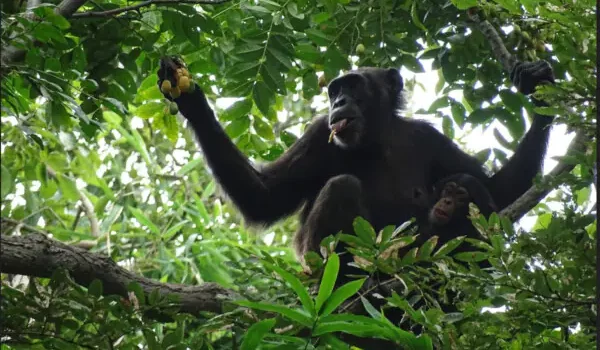
The Jane Goodall Institute’s long-term research in Gombe Stream National Park has revealed remarkable examples of chimpanzee self‑medication — behaviours that deepen our understanding of both primate intelligence and natural pharmacology. Research in Uganda also observed this behaviour, including where chimpanzees would occasionally use the same techniques and ingredients to administer treatments to each other. Many of the plants used, when sampled, had antibacterial properties.
How are chimpanzees using forest medicine?
- Aspilia mossambicensis is eaten to expel intestinal parasites.
- Medicinal soil is consumed for anti‑malaria minerals and toxin neutralisation.
- Elm bark is chewed for its antibacterial properties.
- Cordia flower stems are used to support respiratory health and reduce tuberculoisis risk.
- Unripe figs are eaten for their natural de‑worming effects.
While much of conservation discourse focusing on charismatic animals, it is vital to spotlight how flora and fungi, including MAPs, face similar and often overlooked threats. These threats are interconnected, and integrated action is needed to effectively meet these challenges.
Taking care for the future
JGI’s Tacare approach to community-led conservation offers a model to accomplish long term change, through informing local and national policies that protect biodiversity, training ranges to monitor and report illegal exploitation, implementing cutting-edge technologies to inform conservation action plans, and, importantly, collaborating with local communities to develop sustainable livelihoods that support the local environment.
As we celebrate this year’s World Wildlife Day theme with colleagues around the world, we know there is much more to do to secure a future where all species can thrive. Days like today where we reflect on the deep rooted connections between us and the rest of nature are necessary to ground future action and a step in the right direction.