
Sign the petition to stop this cruel practice
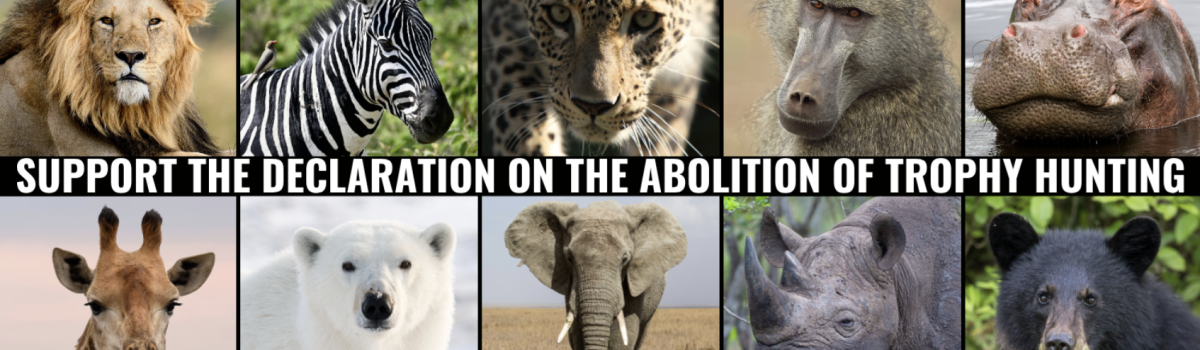
Hundreds of household names have joined with wildlife experts, former Presidents, African community leaders, religious and Indigenous leaders, to call on the UN to abolish trophy hunting, which claims tens of thousands of endangered animals every year. Our founder, Dr. Jane Goodall, was at the heart of the campaign.
The initiative grew out of a 2025 Wildlife & Conservation Foundation event marking the 10th anniversary of the killing of Cecil the lion. In her address, Dr Goodall told the audience: “How on earth have we allowed this to continue for so long? Trophy hunting is unconscionable.”
Eduardo Goncalves of the Wildlife & Conservation Foundation (Campaign to Ban Trophy Hunting) drafted the Declaration with Dr Goodall. He said: “This is about bringing an historic wrong to an end. Like the ban on whaling or the abolition of slavery, it’s time to consign trophy hunting to the dustbin of history. It is an archaic practice opposed by the majority of people around the world, including North America, Europe and Africa. The abolition of trophy hunting was Jane Goodall’s parting wish to the world – let us honor and fulfill her legacy.”
Dr Zara Bending, the Jane Goodall Institute Global’s Resident Expert on Wildlife Crime and International Law, added: “Jane Goodall was a longstanding supporter of the Campaign to Ban Trophy Hunting. We at the Institute are committed to continuing that legacy in her name. As Dr Goodall said: ‘Trophy hunting is not only cruel but it is having a negative effect on endangered and threatened wildlife. Each one of these animals is an individual, with a personality, a mind, and emotions.’”
A new report has been launched as part of the campaign, which reveals that bears, monkeys and elephants are the most popular animals shot by trophy hunters today. Giraffes, lions, hippopotamuses and leopards are highly sought-after too.
Critically endangered animals such as black rhinoceroses continue to be killed, despite IUCN data stating only 3,000 remain.
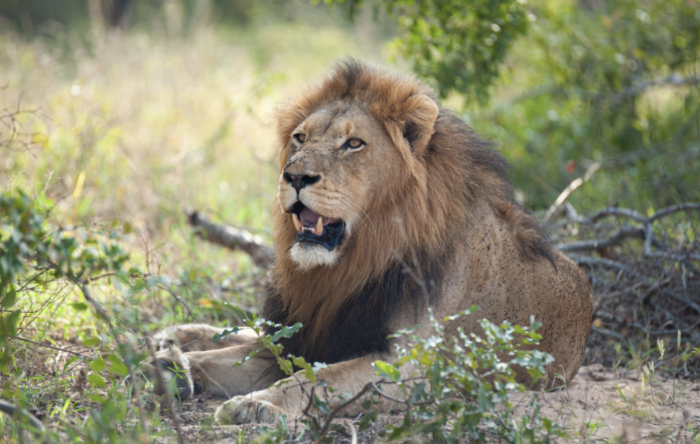
There has been a 73% collapse in wildlife numbers since 1970. Hunting is often cited by conservationists as a contributory factor to population declines. Meanwhile, western governments continue to grant import permits to hunters, allowing them to bring horns and other trophies through customs. Whilst there are approximately 20,000 lions in the wild, for example, 10,000 lions have been shot since Cecil was killed in 2015.
Hunters from just 12 countries account for 90% of all ‘trade’, with the US topping the table. Several European nations are among the leading importers of trophies. Between 80-92% of voters in these countries oppose the ‘sport’, however, as do 70-84% of people in Canada and South Africa – the two most popular destinations for trophy hunters.
Local communities complain they don’t benefit from foreign hunters killing their wildlife – which they’re forbidden to hunt themselves. In Tanzania, the Maasai are being forcibly evicted from their land to make way for luxury hunting resorts.
Senior Maasai Elder Boniface Mpario said: “Trophy hunting is not an African tradition. The whole world needs to come together and stop these hideous acts to make sure that we do not lose species out of human greed. Western governments need to ban the importation of trophies.”
South African academic Dr Ross Harvey, Director of Research at Good Governance Africa, said: “The workers on South Africa’s wildlife ranches are often exploited as deeply as they were during apartheid, and perhaps even more so in some cases. Trophy hunting is the quintessential expression of a colonial endeavour. Switching in an organised fashion from trophy hunting to nature tourism could create many times more jobs in South Africa in poorer rural areas.”
Around the world, we are already seeing examples where community-led conservation, ecotourism, habitat restoration and sustainable livelihoods create economic opportunities while protecting biodiversity. In Kenya photo safaris contribute US $1 billion to the economy – 15% of the country’s GDP. These approaches recognise that living wildlife has immense ecological, cultural and economic value.
They also create something that is harder to measure but just as important: pride, stewardship and hope.
Hope is a word that is central to everything we do at the Jane Goodall Institute.
Many conservation experts are speaking out in favour of the ban. Dr Winnie Kiiru, Director of Conservation Kenya, said: “As a biologist, I know first-hand that trophy hunting is not conservation. It is archaic, cruel, and it’s an elitist industry that fractures complex social structures of iconic species such as elephants and lions that are treated as mere commodities. What infuriates me is that trophy hunters target the prime individuals. They target super-tusker elephants, whose tusks are so large they practically scrape along the ground. These are now just 30-50 individuals left. Wildlife is worth more alive and protected, than dead and exported. Before the hunting ban, elephant populations in Kenya had gone down to 15,000 individuals. Now they’ve recovered to 40,000 individuals. Rhinoceros numbers went down to 400, now we have over 2,000. Kenya is now one of the strongholds for species such as rhinos.
Professor Phyllis Lee, Director of Science at the Amboseli Trust for Elephants, said: “The numbers are simply appalling. This report illustrates the extent of the exploitation of threatened, and even non-threatened, species imported as trophies. Advocates for Trophy Hunting are often blind to its long-term impacts on the hunted species, especially those threatened with extinction.”
Professor Fred Berkovitch, former Executive Director at Save the Giraffes, said: “Trophy hunting is an abomination masquerading as a means of ‘conservation’. CITES have found that trophy hunters have killed thousands of individuals that belong to species threatened with extinction. Killing animals whose numbers are declining is antithetical to conservation.”
Leading conservation scientist and EcoFlix Director Dr Ian Redmond said: “At a time when the number of wild animals has declined across the world, it is madness to allow tens of thousands of them to be killed for trophies. Trophy hunting is cruel and unethical, and does evolutionary damage to the species affected. Many of the targets are keystone species in globally important ecosystems.”
The Catholic Church’s Environment spokesperson (England and Wales), Bishop John Arnold, said: “We have a common responsibility to care for our planet. To think that animals are hunted for fun, when their death serves no other purposes than the provision of a ‘trophy’, is frankly offensive. Trophy hunting is cruel, meaningless, and a cowardly plundering of our animal world.”
The decisions we make today send a message about the values we want to uphold for our shared future. Do we see wildlife as a commodity? Or do we recognise that healthy ecosystems, thriving biodiversity and the survival of endangered species are fundamental to our collective future? The Jane Goodall Institute believes that protecting wildlife is not only a conservation issue – it is an ethical responsibility, an environmental necessity and an investment in a more resilient world.
We encourage everyone to find out more and take action to end trophy hunting.
Find out more: Trophy Hunting page